In 40 seconds
Sleep disturbance affects up to 90% of people with Parkinson's at some point. The pattern is heterogeneous — fragmented sleep, vivid dreams, REM-sleep behaviour disorder (RBD), restless legs, urinary frequency, off-period awakenings, daytime sleepiness. The first PD-specific rTMS sleep RCT (Ali 2024, n=24) showed bilateral parietal 20 Hz rTMS improved Parkinson's Disease Sleep Scale (PDSS) scores, sleep-onset latency, REM latency, awake time, BDI and UPDRS. Promising but small and unreplicated. Consumer PEMF mats have no PD-specific sleep RCT. For RBD specifically, melatonin (modified-release, where appropriate) and clonazepam remain the standard interventions per the AAN and BNF guidance. NICE recommends sleep-hygiene optimisation, light therapy where appropriate, and medication-timing review before pharmacological steps.
Quick facts
- Sleep disturbance prevalence: Up to 90% of PD patients at some point
- First PD-specific rTMS sleep RCT: Ali 2024 (n=24) — bilateral parietal 20 Hz, 10 sessions, improved PDSS
- Consumer PEMF mat in PD sleep: No completed RCT
- REM-sleep behaviour disorder: Standard care: melatonin + clonazepam, falls-prevention measures
- Medication-timing review: Off-period awakenings often resolved by adjusting levodopa schedule
- Standard sleep hygiene: Light, temperature, caffeine, screen time — high-yield basics
- Light therapy: Some evidence in PD circadian sleep disruption
What the sleep evidence shows
Sleep in PD is rarely one problem. A typical pattern includes difficulty falling asleep, frequent awakenings, vivid dreams, sometimes RBD with acting out of dream content, urinary frequency, restless legs, and excessive daytime sleepiness. The treatment approach depends on which pattern dominates.
The Ali 2024 trial
Ali et al. (2024, n=24, 2:1 randomisation, PMC11201640) is the first PD-specific rTMS sleep RCT published. Active treatment was bilateral parietal 20 Hz rTMS, 10 sessions. The active group improved across PDSS, sleep-onset latency, REM latency, awake time, BDI and UPDRS. The trial is small, single-centre, and unreplicated. It is encouraging but not yet at the level of evidence required for clinical recommendation. NICE NG71 (2017) predates the trial and does not include rTMS for PD sleep.
REM-sleep behaviour disorder (RBD)
RBD is highly characteristic of PD and the broader Lewy-body spectrum. It is the loss of normal REM-sleep atonia, allowing the patient to physically enact dream content — sometimes with injurious results to themselves or a bed partner. The standard management is:
- Melatonin (modified-release where appropriate) — first-line in many cases, lower side-effect profile
- Clonazepam — effective but caution in older patients (falls risk, daytime sedation)
- Falls-prevention measures — low bed, padded floor surrounds, removal of sharp bedside furniture, bed partner sleeping separately in severe cases
There is no PEMF or rTMS RCT for RBD specifically. Do not extrapolate from general sleep evidence.
Off-period awakenings
Awakening at 3–5am because the previous evening's levodopa has worn off is one of the commonest PD sleep complaints — and one of the most treatable. A controlled-release bedtime levodopa preparation, or repositioning the timing, can transform sleep. Talk to the specialist nurse before considering anything else.
Restless legs syndrome in PD
Common, often dopaminergically responsive. Dopamine agonists at bedtime (with the impulse-control caveat), iron supplementation if ferritin low, and review of SSRIs (which can worsen RLS) are first-line. PEMF for RLS specifically — see our /restless-legs page.
Light therapy
Bright light therapy (10,000 lux, morning) has small but real evidence for PD-related circadian dysregulation. NICE does not formally recommend, but movement-disorders services increasingly use it. Lamps are widely available privately.
Where consumer PEMF sits
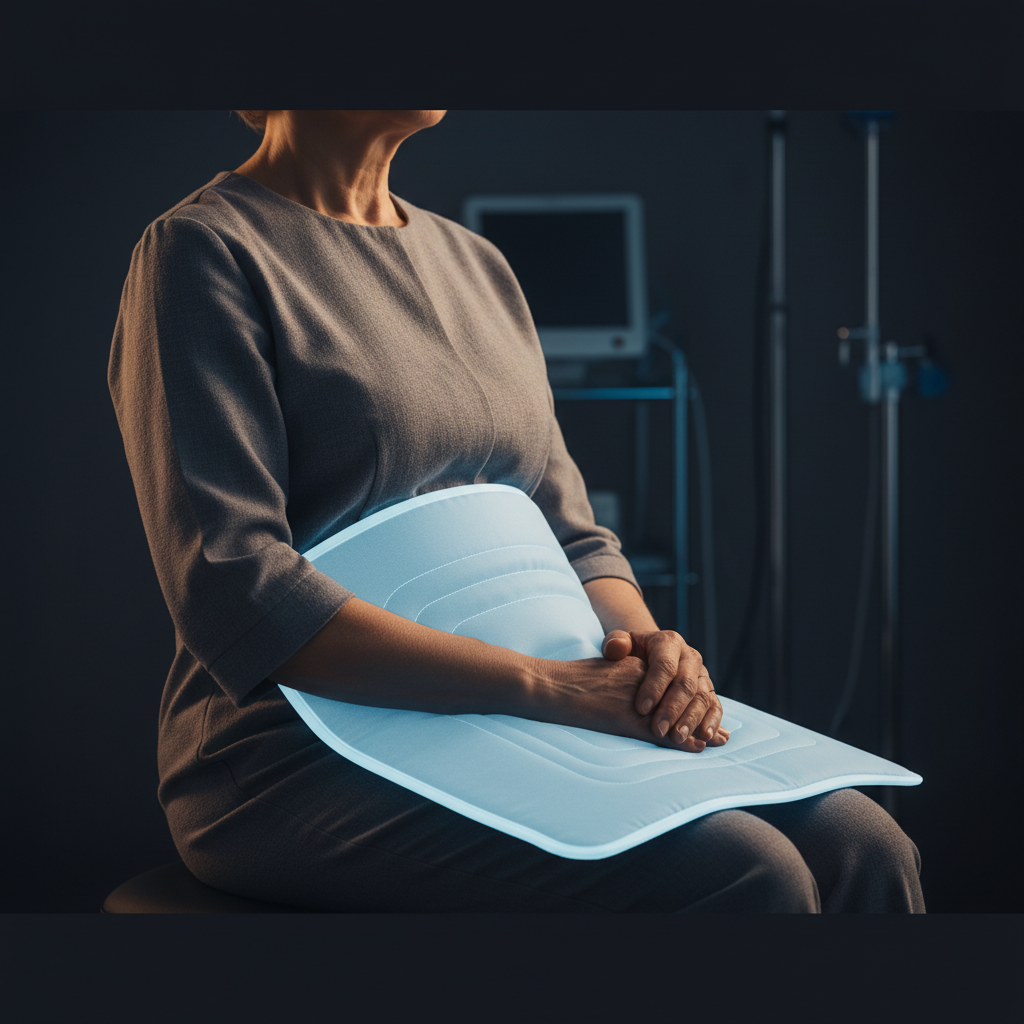
Consumer PEMF mats have no completed PD-specific sleep RCT. General PEMF-for-sleep evidence in non-PD adults is small, mixed, and often brand-funded. Do not extrapolate to PD — comorbidities, medication interactions and the RBD picture are different.
The honest read
For a PD patient with disturbed sleep in 2026, the high-yield interventions are: medication-timing review with the specialist nurse, RBD assessment (and clonazepam or melatonin if confirmed), sleep-hygiene basics, light therapy where appropriate, and treatment of restless legs or urinary symptoms if present. Clinical rTMS for PD sleep is a research-grade option with one positive small trial. Consumer PEMF mats are not on the evidence-based first-line list.
Frequently asked questions
Will a PEMF mat help my mum sleep better with PD?
There is no completed PD-specific sleep RCT for consumer PEMF mats. General PEMF sleep evidence in non-PD adults is small and mixed. The first step is a specialist sleep review — medication timing is often the issue.
Is melatonin safe with Parkinson's medication?
Modified-release melatonin is licensed for short-term insomnia in adults. It is generally compatible with PD medication but should be reviewed with the prescribing memory clinic or movement-disorders nurse.
Should we worry about RBD if my dad acts out his dreams?
Yes — RBD is highly characteristic of PD and the Lewy-body spectrum. Standard care is melatonin or clonazepam plus falls-prevention measures. Discuss with the GP and movement-disorders nurse promptly.
Can rTMS replace clonazepam for RBD?
No. There is no PEMF or rTMS RCT for RBD specifically. Clonazepam and melatonin remain the standard. The Ali 2024 PD sleep trial measured general sleep parameters, not RBD outcomes.
What about light therapy?
Bright light therapy (10,000 lux, morning) has small but real evidence for PD-related circadian dysregulation. Lamps are widely available privately. Worth trying before pharmacological steps for circadian-pattern problems.
Could the carer benefit from PEMF for their own sleep?
Yes — that is a legitimate, separate use case. PEMF for general sleep quality in adults has acceptable wellness evidence and a benign safety profile in the absence of implants. Frame it as carer wellness, not PD treatment.
Is it safe to use a PEMF mat in bed?
For the carer, generally yes in the absence of implants. For the PD patient, falls risk from getting up and orthostatic hypotension still apply. Avoid use on a person with active RBD — disorientation on waking compounds risk.
My dad wakes at 4am every night — is that PEMF-treatable?
It is usually levodopa-treatable. Off-period awakening at 3-5am is one of the commonest PD sleep complaints and often resolves with a controlled-release bedtime levodopa preparation. Talk to the specialist nurse first.
Related Parkinson's pages on PEMF UK
Looking for a PEMF clinic in the UK?
We list every credible PEMF therapy provider in the UK. Please remember: no UK clinic can legally claim to treat Parkinson's with PEMF or rTMS.