In 40 seconds
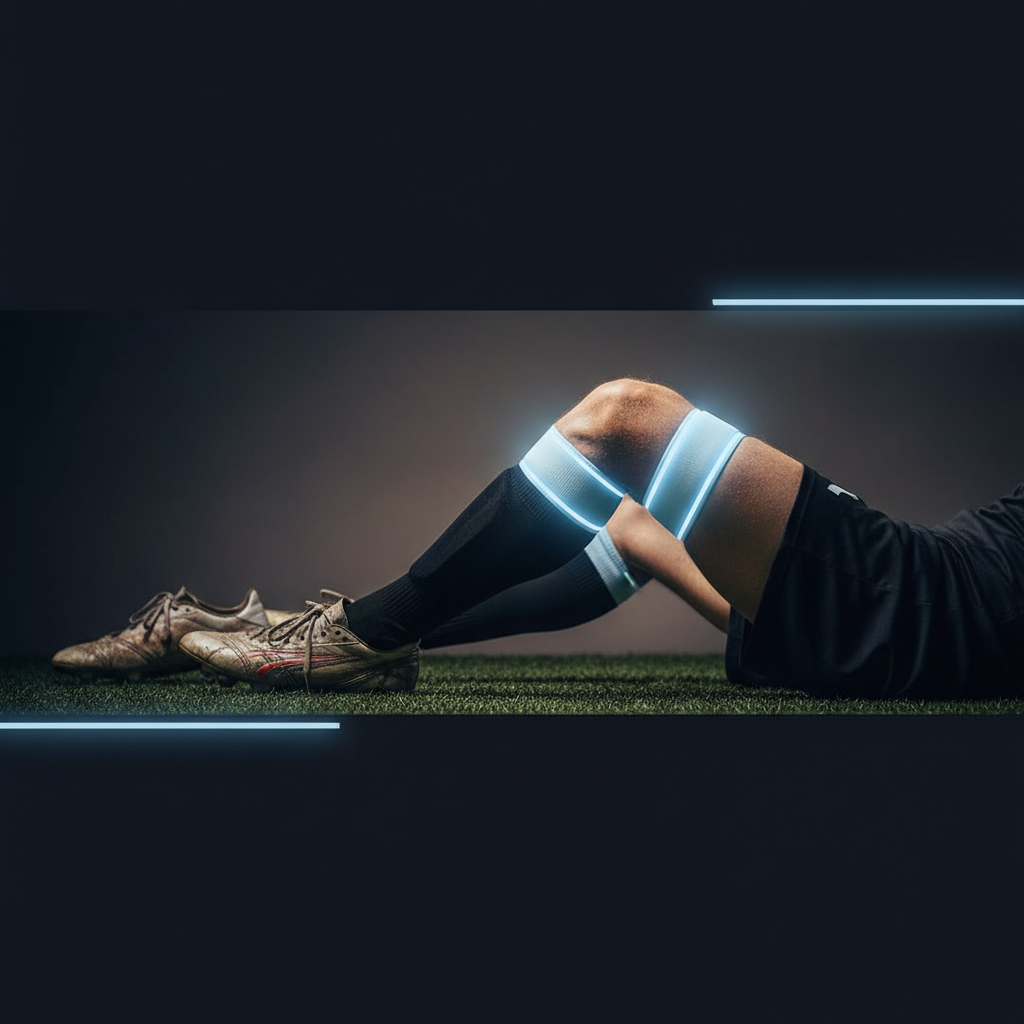
Calf strain risk doubles after age 30 in footballers. The medial gastrocnemius is the most-injured muscle. Mechanism is typically explosive push-off, often happening when players are fatigued. PEMF therapy supports muscle repair and is used to shorten layoffs from a notoriously stubborn injury.
Quick facts
- Risk factor: Age 30+ — doubles
- Most-injured muscle: Medial gastrocnemius
- Mechanism: Explosive push-off, often when fatigued
- Recovery: 2–6 weeks typical
- Recurrence: High without proper rehab
Why this injury happens in this sport
The medial gastrocnemius fires hardest during sprint push-off. Older players have stiffer Achilles complexes and weaker eccentric capacity, multiplying risk.
Recovery and return to sport
Post-injury: 5–7 days reduced loading + daily PEMF. Loading phase: progressive heel raises, calf raises, single-leg work, PEMF 3× per week. Return phase: progressive sprint reintroduction. Eccentric calf strength is the long-term reinjury reducer.
Contraindications
Hard exclusions — do not have PEMF if any apply:
- Pacemaker, implantable cardioverter-defibrillator (ICD), or any cardiac electronic device
- Cochlear implant or other implanted electronic hearing device
- Spinal cord stimulator, deep-brain stimulator, vagus nerve stimulator
- Intrathecal pump or implanted drug pump
- Insulin pump (continuous glucose monitors are usually fine — confirm with the clinic)
- Active infection at the treatment site
- Pregnancy — when treatment would be over the abdomen, lumbar spine, or pelvis
Discuss with your GP or specialist before booking if any apply:
- Active malignancy or recent cancer history (oncologist clearance required)
- History of seizures or epilepsy
- Multiple sclerosis or other neurological condition under specialist care
- Anticoagulant therapy (PEMF itself does not thin blood, but bruising risk if local circulation is already compromised)
- Children under 14 (most UK clinics will not treat under-18s without paediatric specialist input)
- Recent surgery within the last 14 days at the treatment site (confirm with surgeon)
NOT contraindications — these are commonly misunderstood:
- Plates, rods, screws and other passive metal orthopaedic hardware
- Dental implants and dental crowns
- Joint replacements (hip, knee, shoulder)
- IUDs (copper or hormonal)
- Tattoos and piercings (jewellery should be removed for the session)
Specific to this condition: pacemakers, defibrillators, cochlear implants, insulin pumps, electronic implants; active malignancy without specialist clearance; pregnancy (over the abdomen); active infection; epilepsy without GP clearance.
Frequently asked questions
Why are older footballers more prone?
Stiffer tendons, weaker eccentric capacity, slower recovery. PEMF supports each, but eccentric loading is the long-term answer.
Soleus vs gastrocnemius — does it matter?
Yes — soleus injuries are slower and often present as 'tired calf' rather than acute pop. Different rehab emphasis.
Looking for a PEMF clinic near you?
We list every credible PEMF therapy provider in the UK so you can find one near home.